


How to Choose a Diamond Bracelet With Confidence
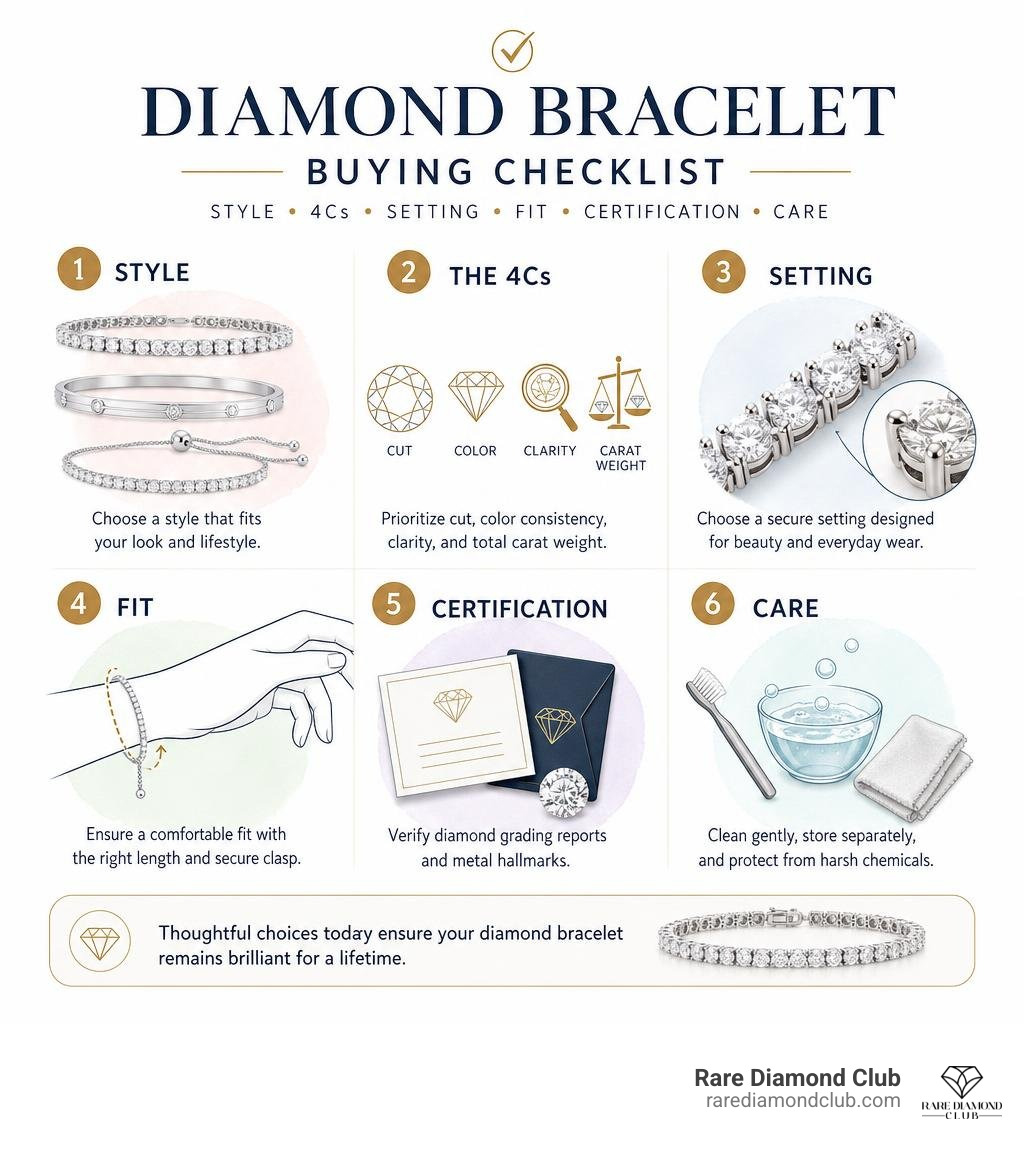
A diamond bracelet should fit securely, use well-matched stones, and have a setting designed for how you will wear it. Start by choosing a style, then compare the 4Cs - especially cut, color consistency, clarity, and total carat weight - along with the metal, clasp, certification, and warranty or return terms.
For a quick buying checklist:
- Choose a flexible tennis bracelet for classic, everyday-to-evening wear.
- Select a bangle, cuff, or bolo design for a stronger modern look or easier sizing.
- Check that diamonds are evenly matched in brightness and color across the bracelet.
- Look for a secure clasp, ideally with a safety latch on valuable line bracelets.
- Confirm diamond documentation and metal hallmarks before you buy.
Diamond bracelets are a meaningful choice for milestones, birthdays, and anniversaries. In fact, gifts account for nearly 65% of purchases in this category. Whether you prefer natural or lab-grown diamonds, price depends far more than size alone: diamond quality, total carat weight, craftsmanship, metal choice, and setting style all matter.
This guide explains how to compare quality, find the right fit, understand realistic prices, and keep a fine diamond bracelet brilliant for years.
Popular Diamond Bracelet Styles and Setting Designs
Selecting the right bracelet begins with understanding how different silhouettes and setting styles balance beauty, comfort, and security. Modern fine jewelry offers silhouettes ranging from delicate, fluid strands to bold architectural bangles.
The structure of the setting determines both the visual character of the piece and its protection during daily wear:
- Prong Settings (3-Prong & 4-Prong): The traditional standard for brilliance. Prongs elevate each diamond, allowing light to enter from multiple angles to maximize fire and scintillation. Four-prong settings offer maximum stone security, while three-prong (or martini-style) settings create a lighter, more delicate look.
- Bezel Settings: A smooth rim of precious metal entirely encircles the perimeter of each stone. This setting creates a sleek, snag-free profile that protects diamond girdles from accidental impacts.
- Channel and Box Settings: Stones are nested within continuous metal tracks or framed compartments, producing a vintage, geometric aesthetic with reliable edge protection.
Classic Tennis and Line Bracelets
The flexible inline diamond bracelet earned its iconic "tennis bracelet" moniker during the 1978 US Open, when professional tennis star Chris Evert paused a match after her diamond line bracelet snapped and fell onto the court. Since then, the design has become an essential staple of fine jewelry wardrobes worldwide.
Today's tennis bracelets are engineered with articulated links that drape fluidly around the wrist. While the traditional round-cut design remains an enduring choice—such as our 9cttw Round Shaped Lab Grown Diamond F VS Classic Tennis Bracelet in 14k Gold—contemporary jewelry design embraces fancy diamond shapes and fresh orientations:
- East-West Orientations: Aligning elongated diamonds horizontally along the wrist creates a broad, contemporary ribbon of light. The 18.5cttw Oval Shaped Lab Grown Diamond F VS East West Line Bracelet in 14k Gold illustrates how horizontal stone setting maximizes wrist coverage with modern elegance.
- Step-Cut Line Bracelets: Emerald cuts provide sleek, hall-of-mirrors flash rather than granular sparkle. Pieces like the 12cttw Emerald Shaped Lab Grown Diamond F VS Tennis Bracelet in 14k Gold deliver a refined, Art Deco-inspired profile.
Every high-caliber line bracelet relies on robust articulation. Each individual link must hinge freely without pinching the skin or twisting out of alignment. Furthermore, high-value bracelets must feature an integrated box clasp backed by double figure-eight safety latches to ensure the piece stays securely on your wrist throughout the day.
Bangles, Cuffs, and Contemporary Bolo Designs
Beyond continuous flexible line bracelets, rigid and semi-rigid silhouettes offer distinctive styling options that excel either worn solo or layered in a stack.
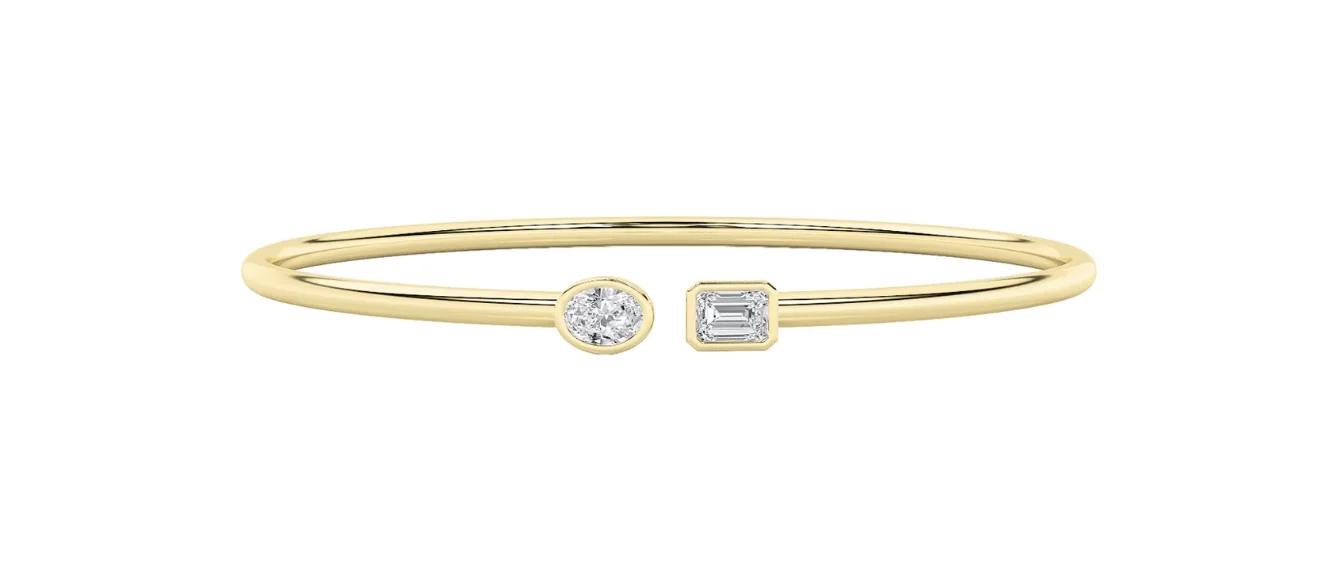
- Diamond Bangles: Solid circular or oval bands that either slide over the hand or fasten with a discreet hinge. Modern innovations like the Lab Grown Flexible Eternity Bangle UD incorporate internal titanium springs within gold channels, allowing the bangle to expand effortlessly over the hand while retaining its shape without requiring a hinge.
- Cuff Bracelets: Open-ended bands designed to slip over the narrowest point of the wrist. Cuffs sit flush against the skin, making them ideal anchor pieces for mixed-metal bracelet stacks.
- Adjustable Bolo Bracelets: Featuring an sliding bead mechanism on a sturdy wheat or box chain, bolo designs allow the wearer to customize the fit precisely. The 3.5cttw Pear Shaped Lab Grown Diamond F VS Bolo Bracelet in 14k Gold provides self-adjusting versatility, making it a dependable choice for gifting when the recipient's exact wrist size is unknown.
Diamond Quality and Authenticity Essentials
Because a diamond bracelet incorporates anywhere from thirty to over sixty individual stones, assessing quality requires a slightly different approach than evaluating a single solitaire engagement ring. Uniformity across the entire piece is the defining hallmark of fine jewelry craftsmanship.
Diamond Cut, Clarity, Color, and Carat Weight
The 4Cs—Cut, Color, Clarity, and Carat Weight—remain the foundational framework for evaluating diamond value:
- Cut: Cut quality dictates how efficiently stones reflect light back to the eye. In a multi-stone bracelet, poorly cut stones will appear dark, lifeless, or hazy next to well-proportioned gems. Consistent table sizes, crown angles, and pavilion depths across every stone ensure an uninterrupted ribbon of brilliance.
- Color: Diamonds must be meticulously graded and sorted so that no individual stone appears visibly warmer than its neighbors. For white metals (platinum and 14k/18k white gold), we curate colorless to near-colorless grades (D through H) to maintain an icy, bright presentation. Warm yellow or rose gold settings offer greater visual tolerance, harmonizing well with stones in the G to I color range.
- Clarity: Because bracelet diamonds are smaller than center stones, eye-clean clarity (VS1 to SI1) is generally the sweet spot for exceptional value. At these grades, inclusions are completely invisible to the naked eye, meaning you don't pay a premium for microscopic clarity characteristics (such as VVS or Flawless) that yield no visual difference at wrist distance.
- Carat Weight (Total Carat Weight / cttw): In bracelets, carat weight is expressed as total carat weight (cttw), representing the combined weight of all diamonds in the piece. A 5.00 cttw bracelet with 50 stones contains individual diamonds weighing approximately 0.10 carats each.
Protective settings, like the Natural Diamond Bezel Set In Line Tennis Bracelet UD, rim each stone in gold to shield the edges while creating a larger perceived diamond diameter.
Certification, Hallmarking, and Metal Purity
Authenticating a diamond bracelet involves inspecting both the gemstones and the mounting:
- Independent Gemological Certification: High-value pieces should be accompanied by verification reports from recognized institutions such as the Gemological Institute of America (GIA) or the International Gemological Institute (IGI). These reports verify whether stones are natural or lab-grown and confirm average color, clarity, and total carat weight.
-
Precious Metal Hallmarks: Fine jewelry mountings must bear clear, stamped hallmarks indicating metal purity. Look for stamps such as
14Kor585(58.5% pure gold),18Kor750(75% pure gold), andPLATor950(95% pure platinum). - Metal Integrity: 14k gold provides enhanced tensile strength and scratch resistance for everyday wear, making it an ideal metal for articulated link settings. Platinum, being naturally dense and malleable, holds diamonds firmly over decades without wearing thin.
Price Ranges and Cost Breakdown
The global diamond jewelry market was valued at approximately $79 billion in 2022 and is projected to reach $116 billion by 2030, growing at a compound annual growth rate (CAGR) of 4.9%. Diamond bracelets represent roughly 12% of this total market value, ranking as the third most sought-after diamond jewelry category behind rings and earrings.
The retail price of diamond bracelets spans a wide spectrum, influenced primarily by stone origin, diamond grade consistency, total carat weight, and metal craftsmanship:
| Total Carat Weight (cttw) | Lab-Grown (F-G, VS) Price Range | Natural Diamond (G-H, SI/VS) Price Range | Typical Diamond Count |
|---|---|---|---|
| 2.00 – 3.00 cttw | $1,200 – $2,200 | $3,000 – $5,500 | 50 – 65 stones |
| 4.00 – 6.00 cttw | $2,200 – $3,800 | $6,000 – $11,000 | 45 – 55 stones |
| 7.00 – 10.00 cttw | $3,800 – $6,500 | $12,000 – $24,000 | 38 – 48 stones |
| 12.00 – 18.00+ cttw | $6,800 – $14,000+ | $28,000 – $65,000+ | 30 – 42 stones |
Key Factors Determining Diamond Bracelet Value
The cost of a luxury bracelet reflects more than the raw weight of its components:
- Stone Matching Labor: Sorting dozens of loose diamonds by millimeter size, color shade, cut proportion, and optical table reflection requires extensive gemological bench time. Mismatched stones detract significantly from overall piece value.
- Link Articulation and Gold Weight: High-quality bracelets feature solid, cast gold links rather than hollowed-out stampings. Substantial metal weight ensures long-term link integrity and prevents premature stretching.
- Mounting Assembly: Hand-setting 40 to 60 diamonds under a microscope requires master-level bench expertise to ensure every prong is centered, tight, and polished smooth.
For collectors who prioritize rare earth-mined gems, exploring a dedicated Natural Diamond Tennis Bracelets Collection provides an array of traditional settings built for multi-generational heirloom longevity.
Mined vs. Lab-Grown Pricing Dynamics
The diamond jewelry landscape has expanded significantly with the rise of lab-grown diamonds. Lab-grown diamonds share identical chemical, physical, and optical properties with natural mined diamonds—they are 100% genuine carbon crystals that test as diamond on thermal and optical gemological equipment.
Consumer interest in lab-grown diamond bracelets has surged, marked by a 78% increase in search volume over recent years. Because lab diamonds are grown via advanced CVD (Chemical Vapor Deposition) and HPHT (High Pressure High Temperature) processes, they bypass extensive mining costs, allowing them to retail at 40% to 60% lower prices than mined equivalents of the same carat weight and grade.
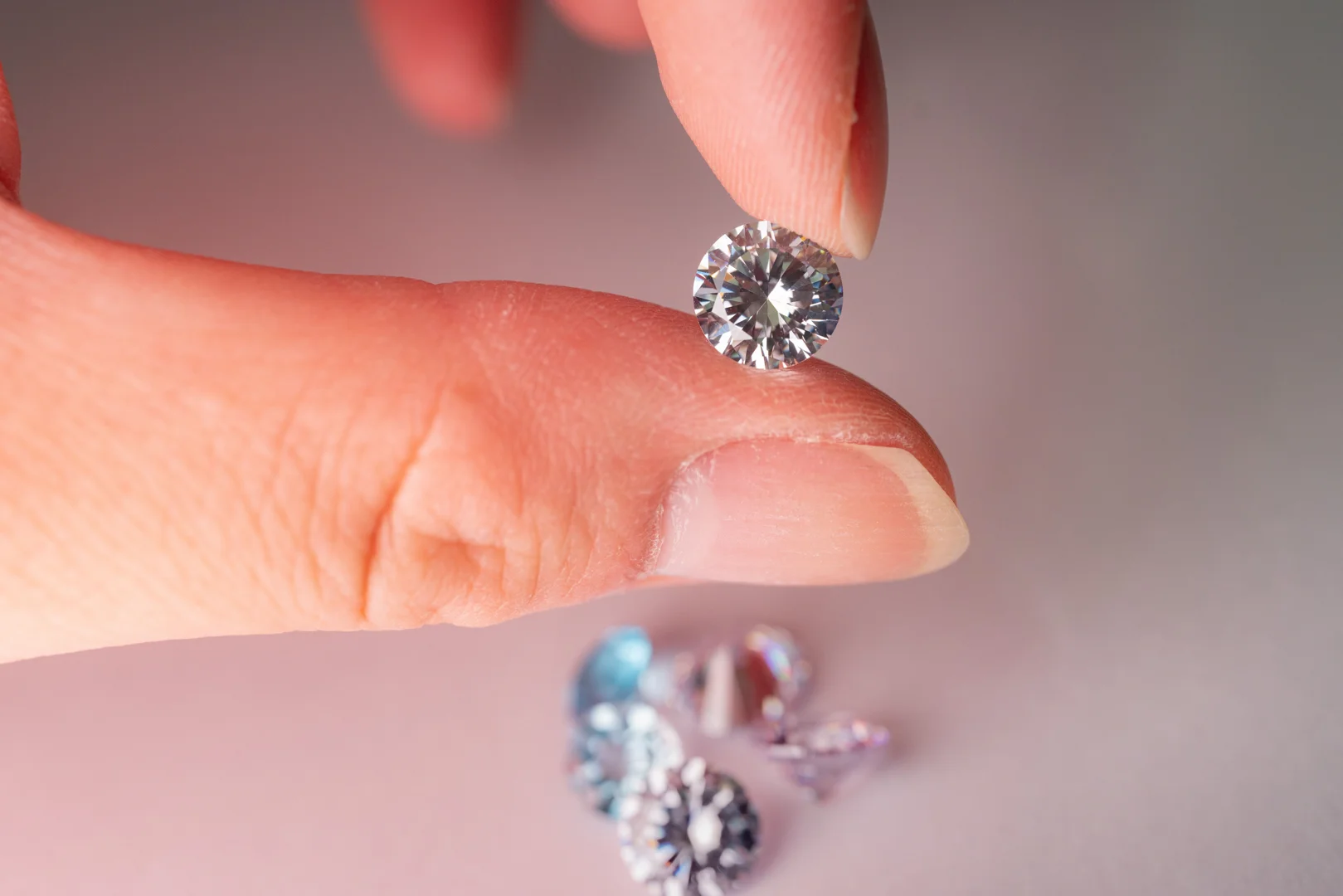
Choosing between natural and lab-grown comes down to personal values:
- Natural Diamonds: Cherished for geological rarity, heritage value, and traditional prestige. A classic piece like the Natural Diamond 4 Prong Tennis Bracelet Round UD represents enduring geological history.
- Lab-Grown Diamonds: Ideal for buyers seeking maximum visual presence, higher color/clarity grades, or larger total carat weights within a specific budget.
Sizing, Care, and Maintenance Guide
A fine diamond bracelet should feel effortless and natural on the wrist, offering secure wear without pulling on clothing or pinching skin.
How to Size and Style a Diamond Bracelet
Standard women's diamond line bracelets are crafted in a 7-inch length, while men's bracelets typically measure 8 to 8.5 inches. Finding your exact size is straightforward:
- Measure Your Wrist: Wrap a flexible measuring tape or strip of paper around your wrist just below the wrist bone where you plan to wear the bracelet. Mark the circumference.
-
Add Ease Allowance:
- For a snug fit, add 1/4 to 1/2 inch to your wrist measurement.
- For a classic comfort drape, add 1/2 to 3/4 inch.
- For a loose drape, add 1 inch.
- Apply the One-Finger Rule: When closed on your wrist, you should comfortably slide one index finger between the bracelet and your skin. If your finger cannot slip underneath, the bracelet is too tight and risks snapping under tension when bending your wrist. If you can fit two or more fingers, the bracelet sits too low and risks catching on furniture or doorknobs.

When styling, line bracelets layer effortlessly with luxury timepieces or rigid bangles. To discover designs tailored for stacking or standalone elegance, explore our complete Bracelets Collection.
Cleaning and Long-Term Preservation
Diamond jewelry worn on the wrist is naturally exposed to hand lotions, perfumes, soaps, and everyday dust. Over time, cosmetic oils settle behind the diamond pavilions, dulling light refraction and muting stone fire.
To safely clean your bracelet at home:
- Soak: Submerge the bracelet for 15 minutes in a small bowl of warm water mixed with a few drops of mild, degreasing dish soap. Avoid harsh chemicals like chlorine or bleach.
- Gently Brush: Use an extra-soft baby toothbrush to gently clean the underside of the settings where grime accumulates behind the diamonds.
- Rinse and Dry: Rinse thoroughly in clean warm water (ensure the sink drain is closed or use a separate bowl) and pat dry using a lint-free microfiber cloth.
Schedule a professional inspection with a fine jeweler once a year. A jeweler will examine every prong tip under magnification to confirm stones remain firmly seated, check articulated link joints for wear, and verify that safety clasps snap shut with crisp tension.
Frequently Asked Questions
Can you wear a tennis bracelet every day?
Yes, high-quality diamond tennis bracelets are built for regular daily wear. For everyday reliability, select sturdy 14k gold or platinum four-prong settings or bezel mountings, and ensure the bracelet features a functional box clasp with dual safety catches. Remove your bracelet before vigorous contact sports, heavy gym lifting, swimming in chlorinated pools, or gardening to avoid snagging prongs or exposing precious metals to harsh chemicals.
What is the most popular total carat weight for a line bracelet?
The most popular total carat weight for a daily-wear diamond tennis bracelet is between 3.00 and 5.00 cttw. This size tier features individual diamonds measuring approximately 2.5mm to 3.2mm in diameter, offering noticeable sparkle that remains comfortable and practical for both professional and casual settings. Carat weights of 7.00 cttw and above deliver a bolder luxury statement ideal for formal evenings and milestone collections.
How do you choose between 14k gold, 18k gold, and platinum?
Choose based on durability, skin sensitivity, and color preference:
- 14k Gold (White, Yellow, or Rose): Contains 58.5% pure gold alloyed with durable base metals. It offers high resistance to scratching and tensile stress, making it an exceptional choice for articulated link bracelets.
- 18k Gold: Contains 75% pure gold, delivering a richer, warmer tone. It is slightly softer than 14k gold, developing a gentle patina over time.
- Platinum: Naturally hypoallergenic, dense, and exceptionally secure. Platinum prongs do not thin out over time; instead, the metal shifts microscopically, making it an outstanding choice for securing high-value diamonds.
Conclusion
A well-crafted diamond bracelet blends structural engineering with timeless elegance. Whether you are celebrating a personal milestone, commemorating an anniversary, or building an enduring fine jewelry wardrobe, prioritizing stone matching, setting security, and precious metal purity ensures your piece will be worn with pride for generations.
At Rare Diamond Club, we specialize in high-end natural and lab-grown diamond creations, combining precision bench craftsmanship with hand-selected G/H VS and F/G VS stones set in solid 14k gold, 18k gold, and platinum.
Discover everyday brilliance or create a bespoke heirloom by exploring our handcrafted Natural Diamond 4 Prong Tennis Bracelet Round or consulting with our master jewelers to design a custom made-to-order piece tailored perfectly to your wrist.